Stack Up Display Font for Handmade Creators
If you’ve ever spent hours tweaking letter spacing on a candle label—only to realize the font lacks presence—or struggled to find a display font that feels both joyful and trustworthy for your boutique tags, Stack Up is the kind of typeface that quietly solves those problems. As someone who designs printable wedding suites, cuts vinyl signs for local makers, and prints seasonal packaging for small-batch soap brands, I don’t reach for display fonts lightly. They need to hold up at 12pt on a sticker, scale beautifully to 24 inches on a farmhouse welcome board, and still feel intentional—not just decorative.
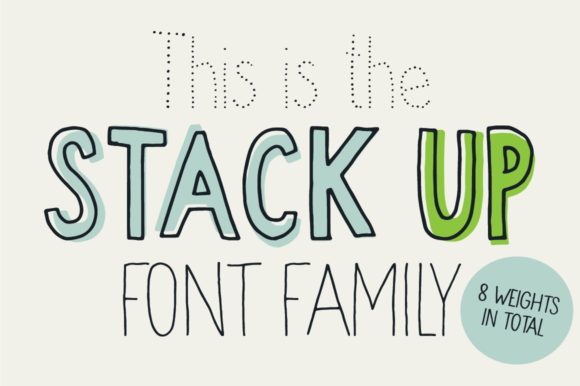
Stack Up is a modern display font with confident, slightly rounded letterforms and subtle geometric warmth. It’s not overly playful, nor is it stiff or corporate—it strikes that rare balance where letters feel hand-informed but precisely crafted. The uppercase characters have generous x-heights and open counters, making them highly legible even when cut small on Cricut or Silhouette machines. Lowercase letters maintain rhythm without sacrificing personality—perfect when you’re layering text over textured paper or distressed wood grain in mockups.
I use Stack Up most often for short, high-impact applications: product names on apothecary labels, “Hand-Poured” callouts on soy wax candles, “Farm Fresh” banners for market booths, and bold headers in digital planner templates. Its clean lines translate well across mediums—whether printed on kraft sticker paper, engraved onto wooden gift tags, or layered into SVG files for sublimation mugs and tote bags. Because it’s designed as a display font—not body text—it shines brightest in titles, headlines, signage, and decorative phrases. Don’t try to set full paragraphs in Stack Up; instead, let it anchor your design while a neutral sans serif (like Montserrat or Inter) handles supporting copy.
Readability matters deeply when your craft goes to real customers. I tested Stack Up at 8pt on matte vinyl stickers—no issues. At 36pt on chalkboard-style wedding welcome signs? Crisp, friendly, and effortlessly elegant. Even on low-resolution Etsy listing previews, the font retains its charm without pixelating or losing definition. That reliability means less back-and-forth with printers, fewer re-cuts on my cutting machine, and more consistent branding across physical and digital assets.
Pairing Stack Up thoughtfully elevates your whole product line. For wedding stationery, I combine it with a delicate script font (like *Lavanderia* or *Maiden Orange*) for names and dates, then drop in a light-weight sans serif for addresses and details. On boutique product tags, I’ll use Stack Up for the brand name and switch to a warm serif like *Cormorant Garamond* for ingredient lists or care instructions. For holiday-themed printables, pairing it with a subtle handwritten font adds contrast without visual clutter—think “Cozy Season” in Stack Up, followed by “Hand-stitched • Small Batch • Made with Love” in soft cursive.
What sets Stack Up apart from other display fonts I’ve tried is how consistently it supports commercial use. It includes clean OTF and TTF files, standard OpenType features like stylistic alternates and ligatures (which add polish to words like “love,” “forever,” or “gather”), and broad language support—including accented characters for French, Spanish, and German shop names or bilingual invitations. No scrambling to substitute glyphs mid-design. And because it’s a premium font built for creators, the commercial license covers exactly what we need: selling physical products (stickers, cards, signs), digital downloads (planner pages, Canva templates), SVG bundles for crafters, client work, and even merchandise like t-shirts and mugs.
Practical tip: Always test your final file in outline mode before sending to cut or print. Some display fonts render differently depending on software—Stack Up holds up well in Cricut Design Space, Silhouette Studio, Adobe Illustrator, and Affinity Designer, but outlining ensures no surprises. Also, if you’re using it for laser-cut wood signs or engraved metal tags, stick to medium or bold weights—thin strokes can vanish or burn unevenly on certain materials.
I’ve used Stack Up on everything from Easter egg dye kits (“Pastel Palette”) to artisanal coffee bag seals (“Small Roast • Big Flavor”), and each time, customers comment on how “thoughtful” and “intentional” the packaging feels. That’s not accidental—it’s the quiet power of strong typography. When your font communicates quality before a customer even reads the first word, you’re not just selling a product—you’re reinforcing trust, memory, and brand identity.
For printable creators, it adds instant sophistication to wall art collections (“Bloom Where You’re Planted” looks especially grounded and uplifting in Stack Up). For invitation designers, it gives ceremony programs a contemporary yet timeless lift. And for anyone building a cohesive shop aesthetic—whether you sell lavender sachets, ceramic planters, or custom pet portraits—Stack Up becomes part of your visual vocabulary, not just another font in the folder.
It’s worth noting that while Stack Up isn’t a serif or script font, its character comes through structure and spacing—not flourishes. That makes it unusually versatile across niches: minimalist skincare brands, rustic bakery labels, modern baby shower invites, even tech-adjacent printable planners (yes, really—paired with sharp monospace accents, it reads as confidently innovative). You won’t find swashes or dramatic tails here, and that’s the point. Its strength lies in clarity, consistency, and craft-first intention.
If you’re evaluating whether Stack Up fits your workflow, ask yourself: Do I need a display font that works equally well on a tiny jar label and a 36x48” gallery wall print? Does my current go-to font sometimes feel too cold—or too busy—for the warmth my brand represents? Will this typeface help me say more with less text? If the answer is yes, Stack Up earns its place in your core design assets—not as a novelty, but as a reliable, beautiful, commercially ready tool.